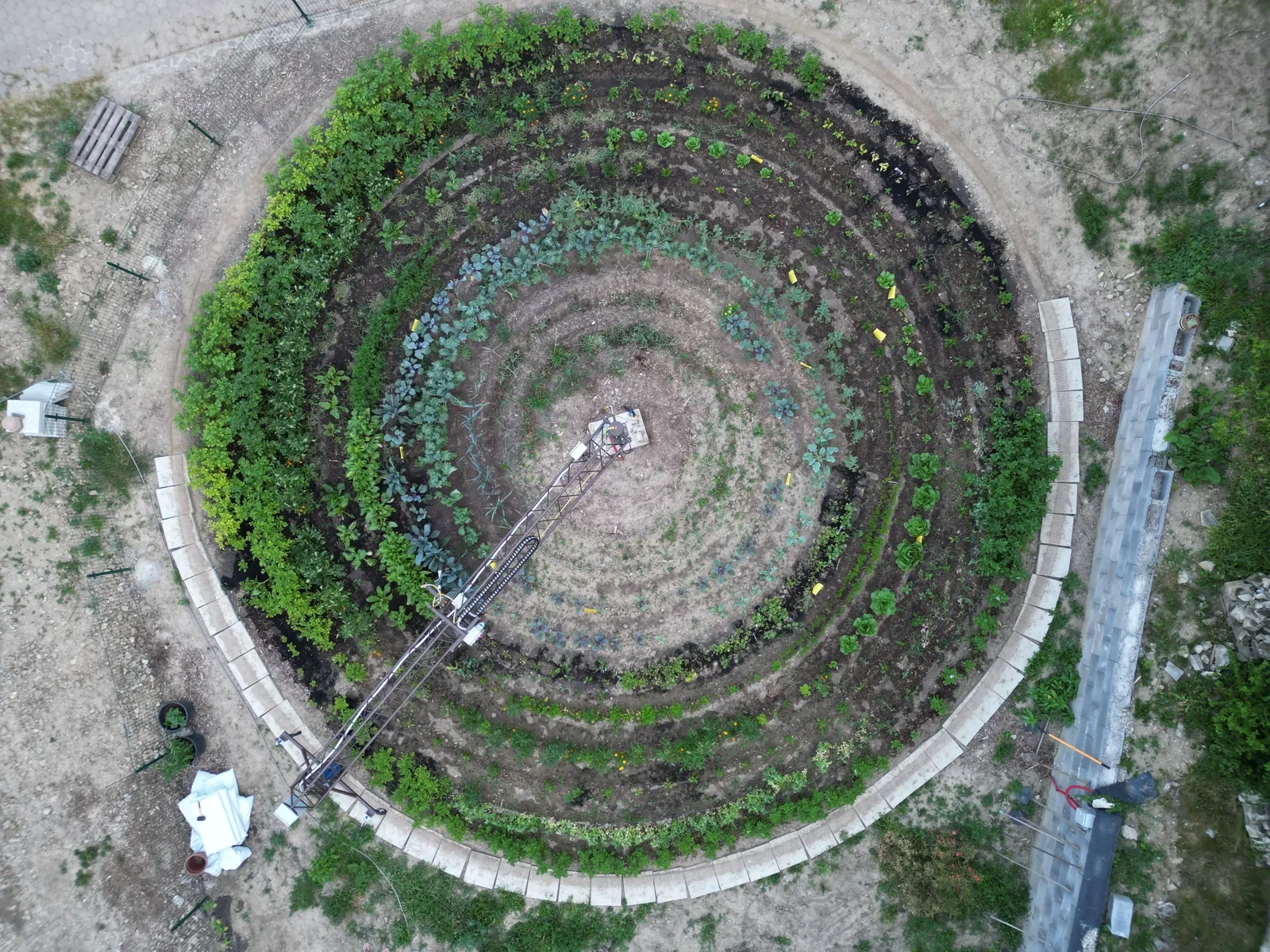
In 2026 we grew vegetables on our own for the first time, on the Small Farm in Púchov – as complete beginners. We had grown a few things before, but not much. Janko had given us plenty of theory and we spent a few weekends at his farm. But we had never grown on the circle itself. On one circle we had more than 20 kinds of vegetables and herbs. Some things worked beyond expectations, others not at all. We write openly about both, because this is exactly how everyone who buys an Agrokruh starts out.
On the farm of Janko Šlinský, who has been growing for 25 years, the results look different. This article shows what a newcomer can manage in the first season – and what can be improved straight away next time.
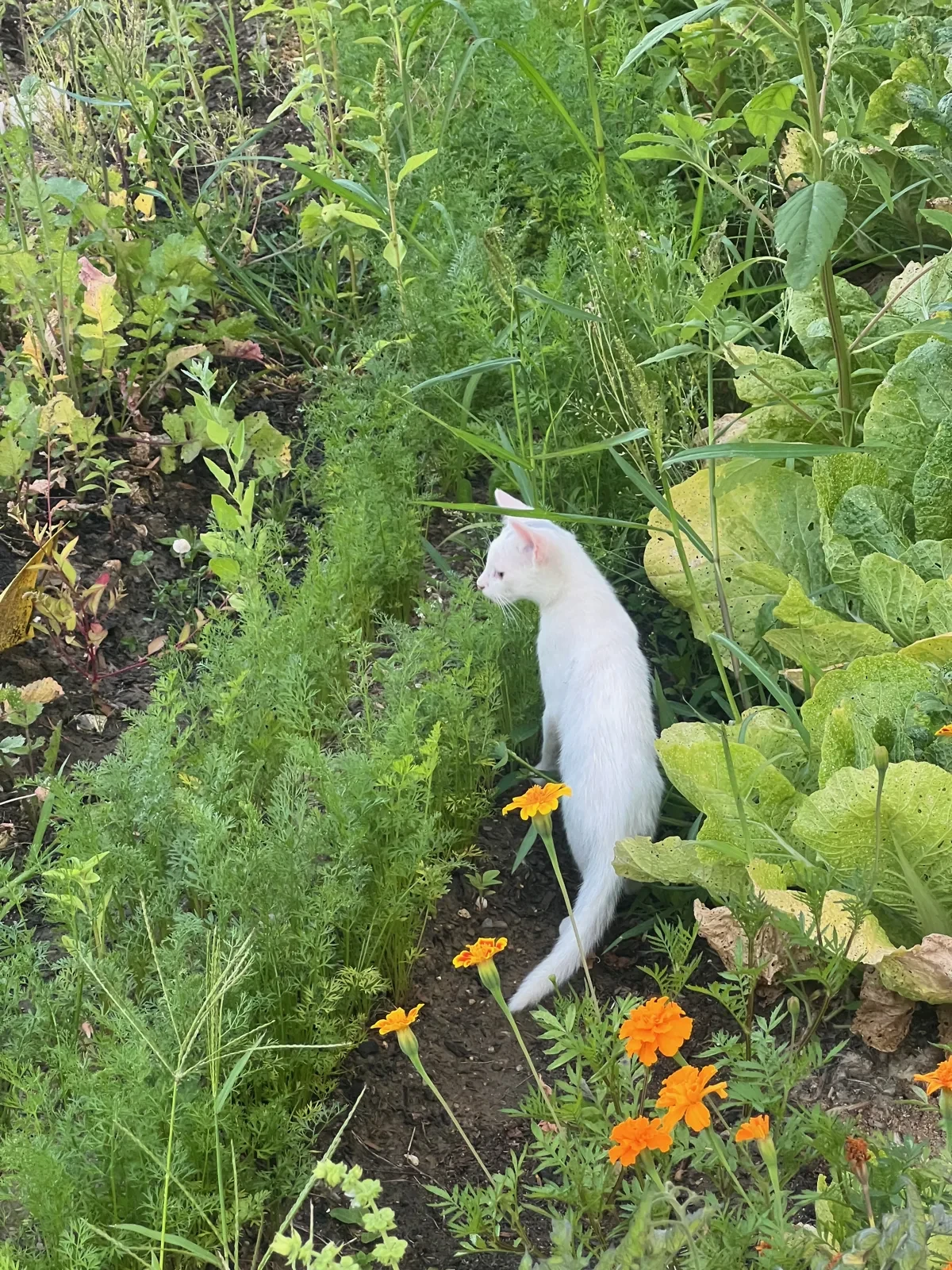
The difference in farm size matters too. Our 15-metre circle was “pampered” – it is very small and we had time to look after every plant. Janko has more than 15,000 plants on his farm, which is a different league. Our farm is also on the plot of a family house, fenced and protected against wildlife. On Janko’s farm, now at the end of October 2026, you can see a huge number of vole holes. They probably like it there more than on fields treated with chemicals. And voles are not the only guests – Janko also battles hares, deer, pheasants and other wildlife. We had no problem with voles this year, probably also because our cats were around all summer. That’s why we always recommend fencing the farm.
The biggest lesson: compost helps
Part of the circle was fertilised with compost, part not yet. The difference was visible on every crop that grew in both parts.
| Crop | With compost | Without compost |
|---|---|---|
| Tomatoes (Šejk) | 20 plants, approx. 4 crates | 17 plants, roughly a third of the yield |
| Pepper (Slavus) | 60 healthy plants | 9 weak plants |
| Beans (pods) | a few bushes, approx. 2 kg | weak plants, hardly any yield |
| Leek | grew beautifully | did not grow |
| Curly and blue kale | beautiful plants | weaker |
| Kohlrabi, beetroot, celery | – | smaller, some did not mature |
The conclusion is simple: before the first season, prepare the soil properly. Compost is not an extra, it is the foundation.
What worked
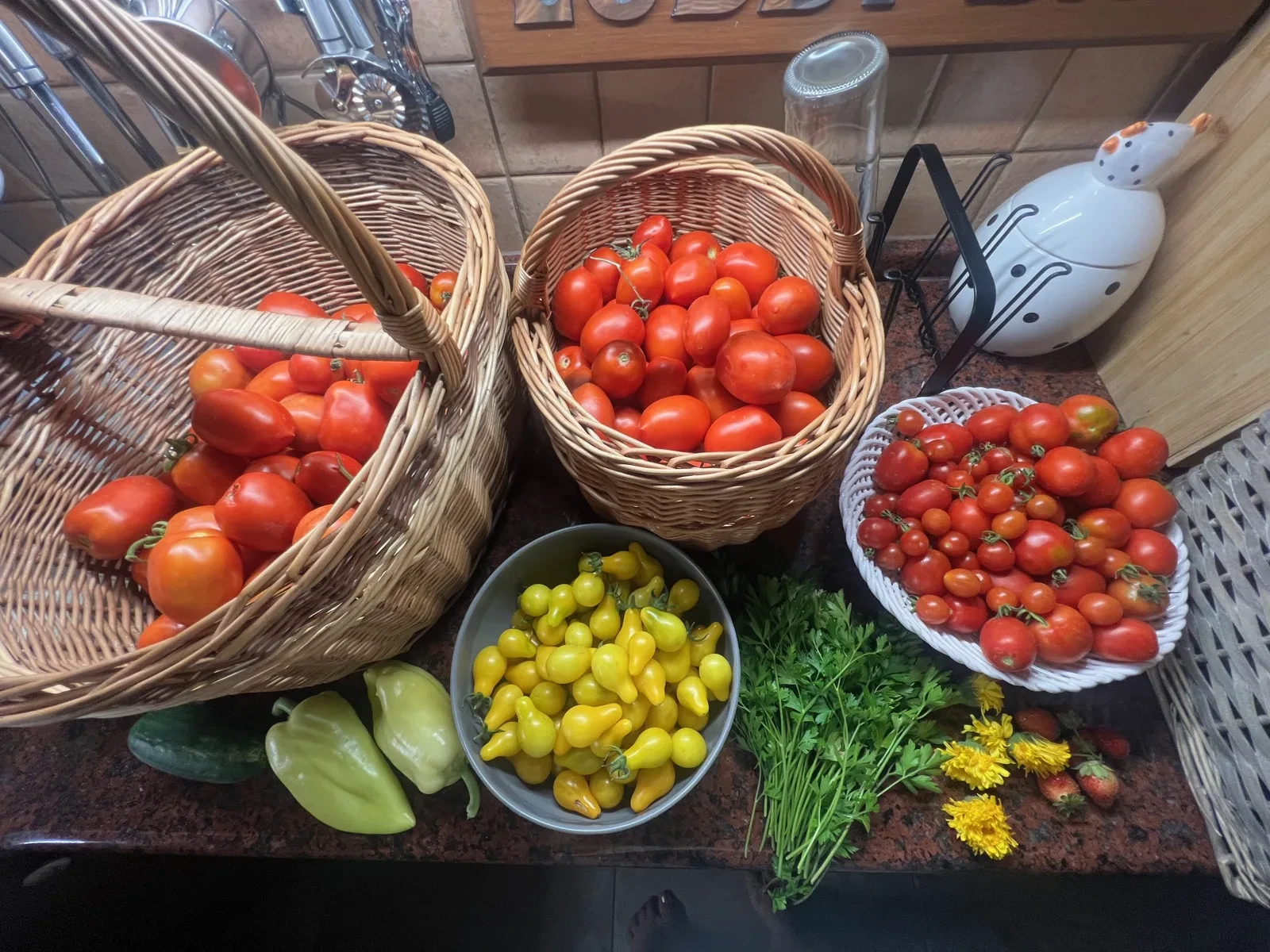
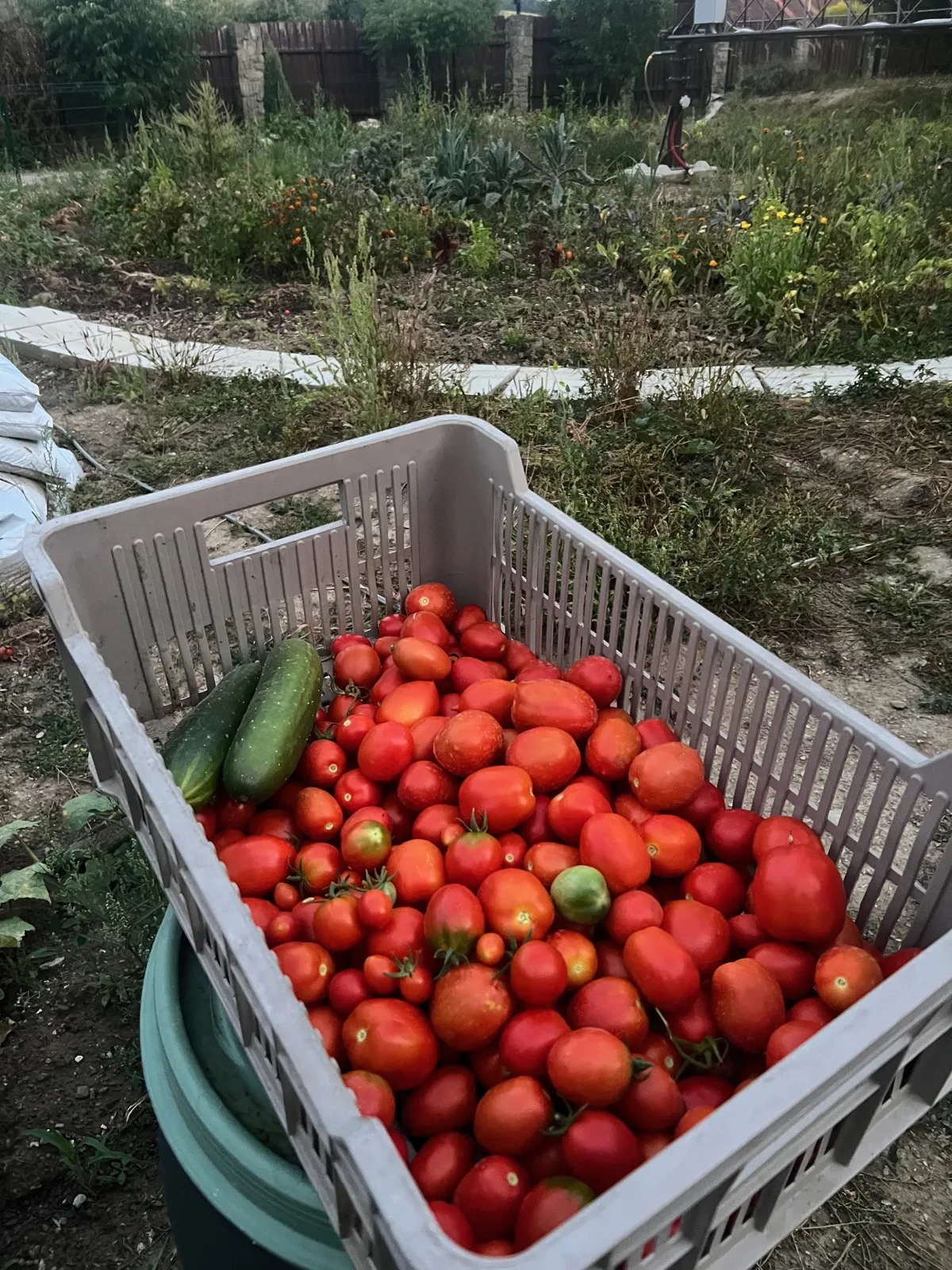
This is what we really ate, preserved and froze from one circle. The figures are as of 1 September; carrots, parsley, celery and some of the kohlrabi were still ripening.
| Crop | Planted | Harvest |
|---|---|---|
| Šejk tomatoes | 37 plants | approx. 5 crates, 40 jars of preserves |
| Potatoes Lea, Twister, Alouette | 3 × 2.5 kg seed potatoes, 30 cm apart | 3 crates from Lea and Twister, Alouette still in the ground |
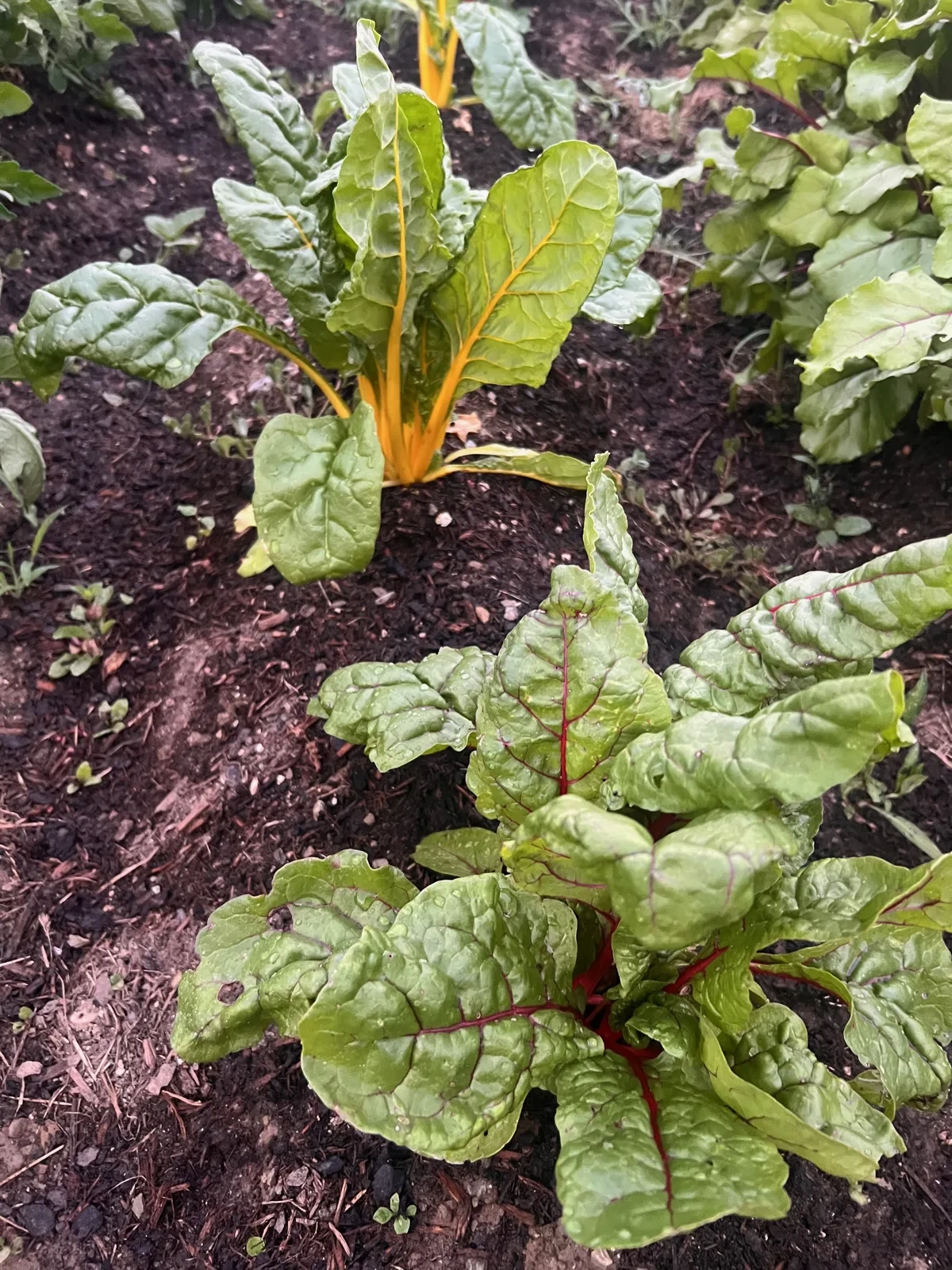
| Swiss chard | 26 plants | leaves all season, 10 × 1.5 l tubs frozen, 1 l dried powder |
| Slavus pepper | 69 plants | 1 small crate by 1 Sept, still ripening |
| Beetroot | 3.5 m row | 13 × 0.7 l jars preserved |
| Purple beans | 5 m row | approx. 2 kg |
| Red kohlrabi | 47 plants | approx. 20 pcs, the rest still growing |
| Curly and blue kale | 41 plants | for eating and a few tubs frozen |
| Basil | between tomatoes | frozen and dried |
| Leek | 36 seedlings | for eating and freezing |
Between the tomatoes and peppers we planted marigolds and basil. They flower, attract pollinators, and basil goes well with tomatoes in the kitchen too.
What didn’t work and why
Most failures came from three mistakes: late sowing, poor soil and underestimated flea beetles.
Late sowing. We sowed peas, lettuce, radishes, onions and garlic only in May. It was already warm, so plants went straight to flower or didn’t come up at all. From 92 pea clusters we harvested only about 300 g. Garlic didn’t come up at all.
Poor soil. Outside the compost, kohlrabi, celery, parsley, nasturtium and cylindrical beetroot were small or unproductive. From 3 m of cylindrical beetroot we got about 5 small roots.
Flea beetles. They attacked Chinese cabbage, kale and radishes. Yellow sticky traps helped, and above all compost tea we got from the Baláks of Živá záhrada. We were very surprised how well it worked. Had we used it a week earlier, we think we would have saved everything. As it was, about half of the 27 Chinese cabbages grew and we didn’t harvest the rest before they bolted.
Smaller mistakes: we didn’t thin the carrots and beetroot, we mislabelled the kale seedlings, and the broccoli flowered too early. We are still finding out why.
What we’ll do differently in 2027
- Compost on the whole circle before spring.
- Sow and plant lettuce, radishes, peas and onions in early spring.
- Compost tea and yellow traps against flea beetles right after planting, not only once they attack.
- Thin carrots and beetroot after they come up.
- Choose early and late varieties of carrots and leeks following Janko’s advice, so the leeks can overwinter in the ground.
- Earth up potatoes more.
- Feed peppers with calcium – in the compost they showed a deficiency.
- Harvest Chinese cabbage earlier, before it starts to flower.
- Label seedlings properly.
Summary
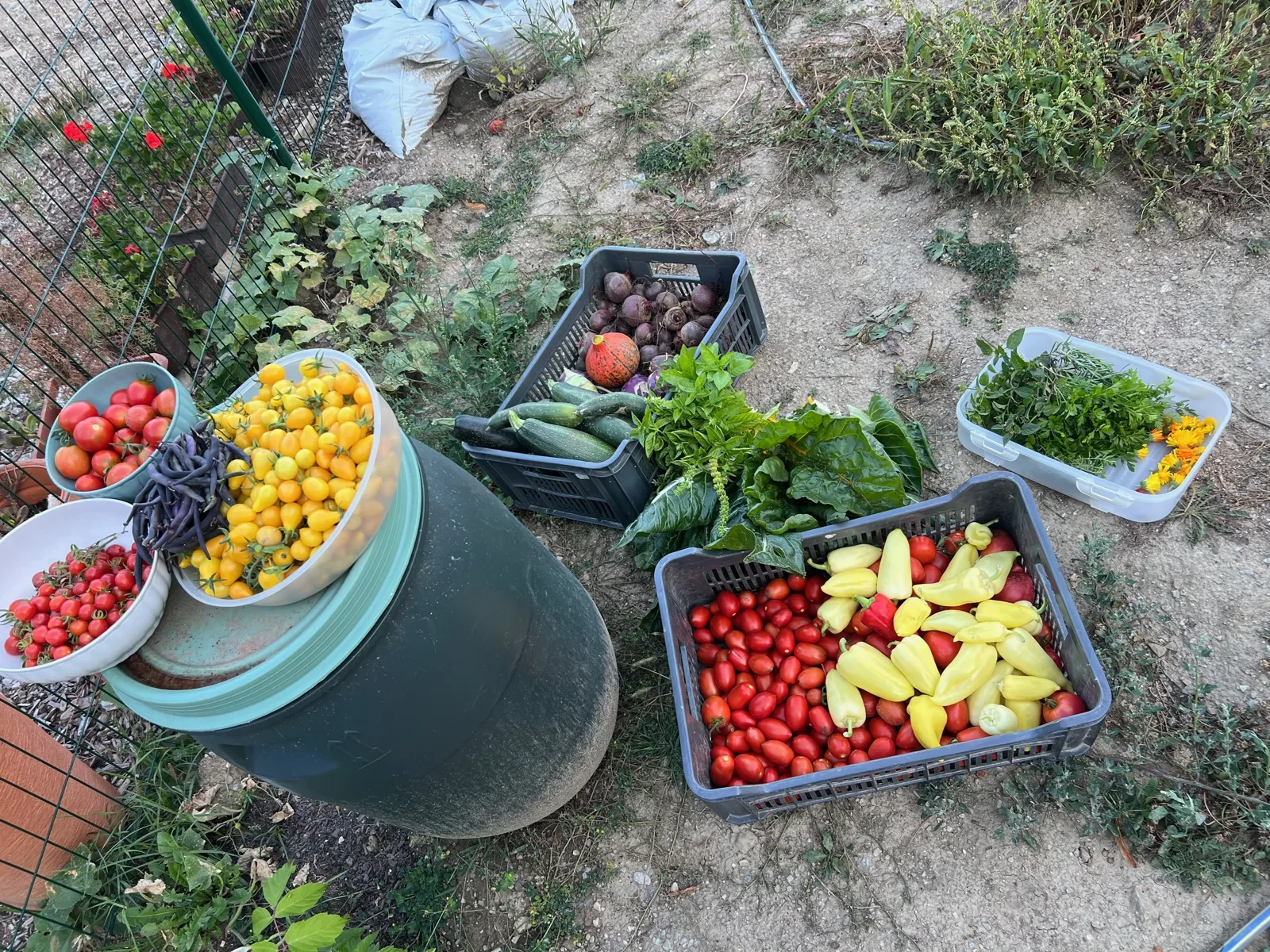
Even as beginners, one circle gave us vegetables all summer and a full pantry for winter. We learned most from our mistakes: when to sow, how to prepare the soil and when to start protecting plants. That’s why every Small Farm comes with consultations with us for the first two seasons – we’re happy to pass on what we learned ourselves.
Want to see our circle in person or get advice on your own farm? Write to us or call +421 918 707 121.
Zuzana and Vilo
Leave a Reply